Mastering Professional Nail Prep for Maximum Gel Retention
Professional nail prep is the essential process of removing the cuticle, dehydrating the nail plate, and refining the surface to ensure maximum product adhesion. Proper preparation prevents lifting and premature service failure, directly impacting the durability and professional quality of gel, acrylic, and builder gel applications in a salon environment.
Essential Steps for Mechanical Nail Preparation
The foundation of any long-lasting nail service begins with the thorough removal of the pterygium from the plate.
This non-living tissue is the primary cause of product lifting if not completely cleared during the dry manicure phase.
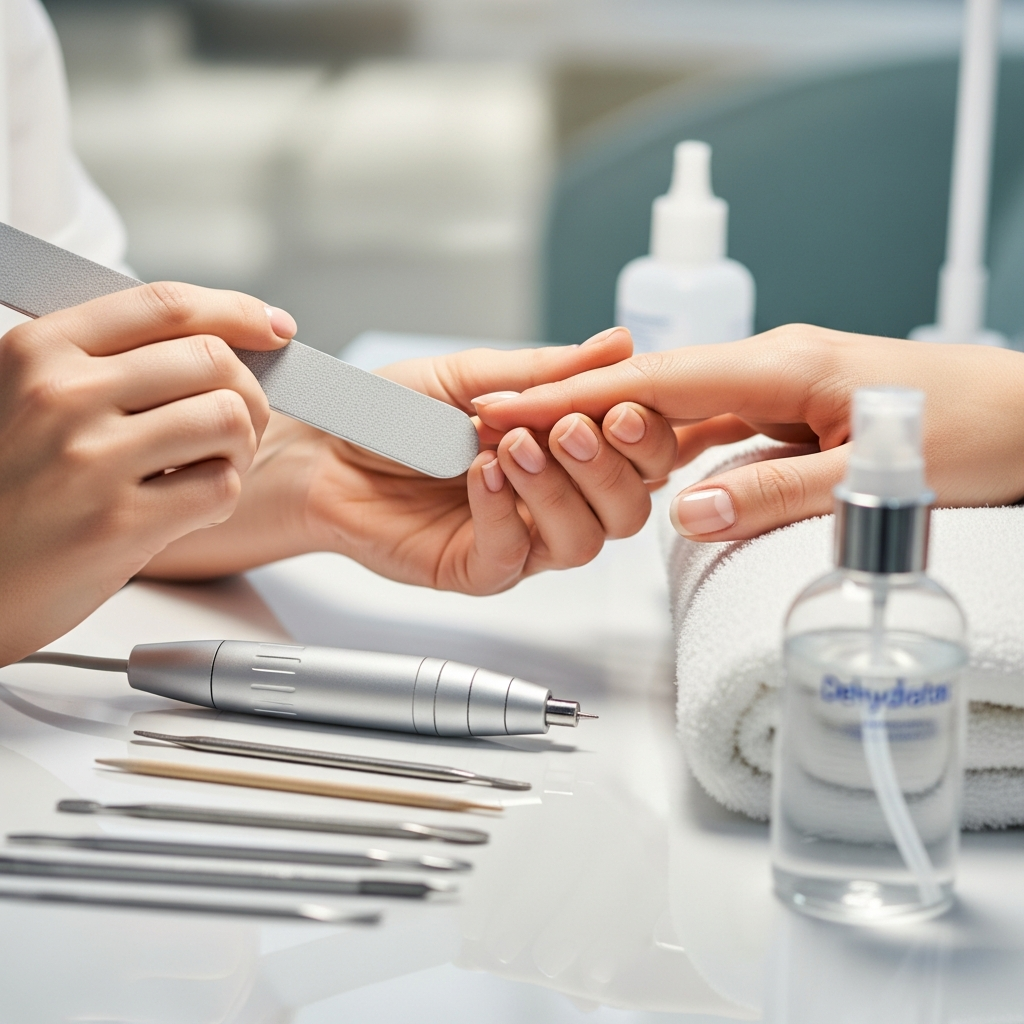
Technicians should use a professional E-file with a fine diamond bit to gently exfoliate the cuticle area.
Surface Etching and Grit Selection
Creating a textured surface is vital for the mechanical bond between the natural nail and the enhancement product.
A 180-grit file or buffer should be used to remove the natural shine and open the keratin cells without thinning the plate.
Avoid over-filing, as a compromised or overly thin plate will fail to hold the product effectively over time.
Clearing the Lateral Folds
Debris trapped in the lateral folds can interfere with the sidewall application of gel or acrylic.
Use a nail brush to remove all dust particles after mechanical filing to ensure a clean canvas.
Any remaining dust acts as a barrier, preventing the primer and base coat from reaching the surface.
Chemical Preparation and Dehydration Standards
After mechanical prep, the nail plate must be chemically balanced to ensure optimal adhesion.
A high-quality dehydrator removes surface oils and temporary moisture that can cause immediate service failure.
In the United States, professional standards dictate the use of a pH balancer to stabilize the plate before application.
The Role of Protein Bonds and Primers
Primers act as a double-sided adhesive between the natural nail and the enhancement material.
Acid-free primers are the industry standard for most gel and dip systems, providing a sticky layer for the base coat.
Ensure the primer does not touch the surrounding skin, as this can lead to irritation and future product lifting.
Common Technical Mistakes and Corrections
Flooding the cuticle with base coat is a frequent error that leads to nail enhancement failure within days.
Leave a tiny margin between the product and the proximal fold to ensure a clean seal on the plate.
Capping the free edge is also mandatory to prevent moisture from entering between the layers during daily client activity.
- Avoid Over-Saturation: Excessive primer can lead to the opposite effect and cause lifting.
- Control Moisture: Ensure the client does not wash their hands or use oils immediately before the service.
- Proper Curing: Verify that the nail lamp is high-intensity and the bulbs are functioning at full capacity.
Maintaining Structural Integrity
The apex must be correctly positioned based on the length of the nail to distribute stress properly.
An incorrectly placed apex leads to cracks at the stress points, regardless of how well the prep was executed.
Balance the thickness of the product to support the free edge without creating bulk at the cuticle line.
