Mastering Professional Nail Prep for Long-Term Retention
Professional nail prep is the essential process of removing the cuticle, dehydrating the nail plate, and creating a mechanical bond to prevent lifting. Effective nail preparation ensures long-term adhesion for gel, acrylic, and dip systems by eliminating oils and debris that compromise the chemical integrity of the nail enhancement product.
The Foundation of Mechanical Adhesion
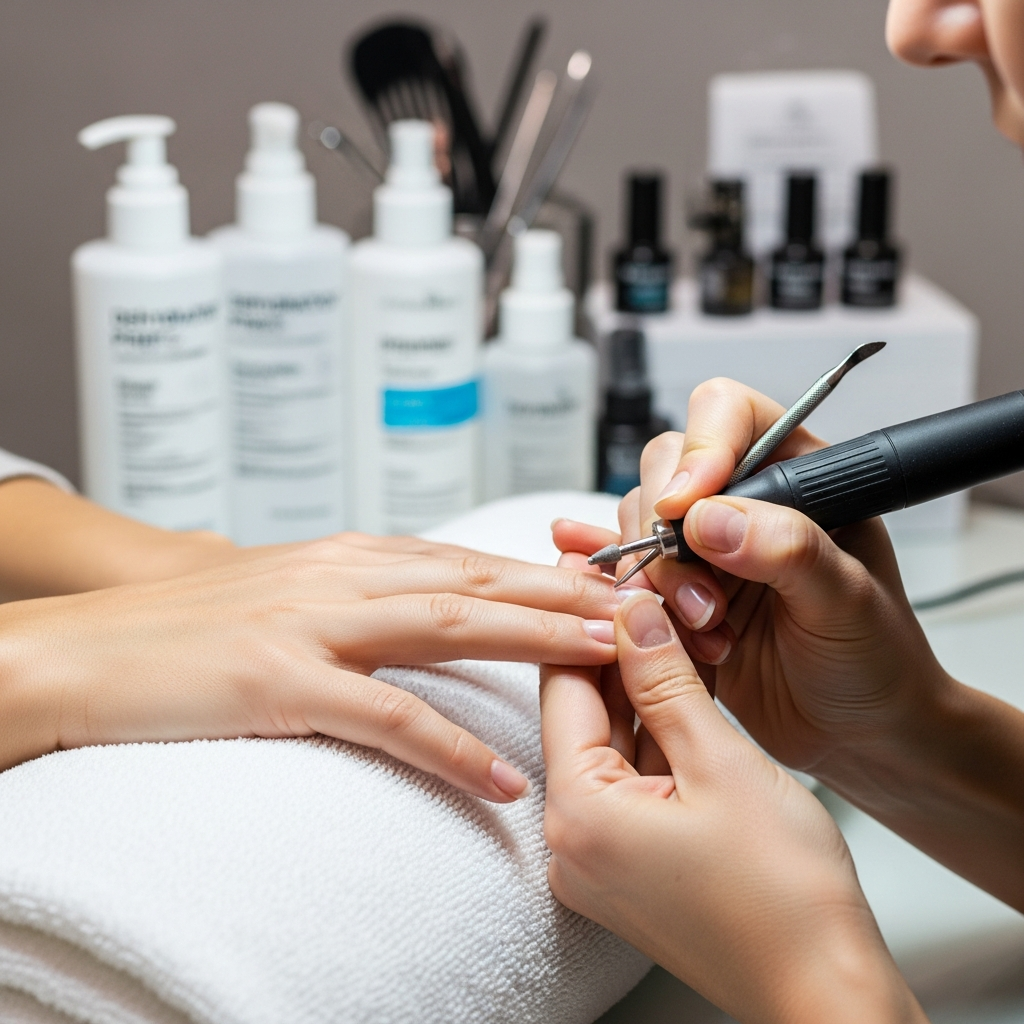
Mechanical bonding relies on a clean, textured surface for the product to grip. Use a high-quality 180-grit file or a fine-grit e-file bit to gently remove the natural shine from the nail.
Avoid over-filing, as thinning the nail plate reduces the surface area available for bonding and causes client sensitivity. Focus on the perimeter and proximal nail fold where lifting most frequently occurs.
Advanced Cuticle Management Techniques
Successful product application requires the complete removal of non-living tissue from the nail plate. Use a professional pusher to lift the eponychium and expose the true cuticle underneath.
Removing Non-Living Tissue
- Dry Prep: Perform cuticle work on a dry nail to prevent the plate from absorbing water and expanding.
- Detailing: Use a diamond flame bit to clear the lateral folds and the lunula area of any stubborn debris.
- Dust Removal: Use a stiff nylon brush to clear all filings from the sidewalls before applying chemicals.
Chemical Dehydration and pH Balancing
After mechanical prep, the nail must be chemically cleansed to remove surface oils and moisture. Apply a professional-grade dehydrator containing ethyl acetate or isopropanol to the entire surface.
Follow with a pH balancer or primer specifically designed for the system you are applying. For acrylics, an acid-based or acid-free primer creates a double-sided adhesive bond between the keratin and the polymer.
Common Technical Prep Mistakes
Touching the nail plate with your fingers after prepping reintroduces skin oils, which is a leading cause of service breakdown. Always ensure the client does not touch their face or hair during the process.
Inconsistent dust removal can also lead to “pocket lifting” where the product seals over debris. A thorough wipe with a lint-free pad and 90% isopropyl alcohol ensures a pristine surface for application.
Safety and Structural Integrity
Maintaining the health of the natural nail is vital for long-term client retention in U.S. salons. Never use heavy pressure when prepping the area around the matrix to avoid permanent damage.
Ensure all tools are sanitized according to state board regulations before starting the prep sequence. Clean prep leads to a durable structure that withstands daily wear and maintains professional standards.
