How to Prevent Nail Lifting for Better Retention
Nail lifting is primarily prevented by thorough mechanical and chemical preparation of the natural nail plate before product application. Professional technicians must remove the non-living tissue from the eponychium and use a high-quality dehydrator and primer to ensure maximum adhesion for gel, acrylic, or dip systems.
The Essential Steps of Mechanical Preparation
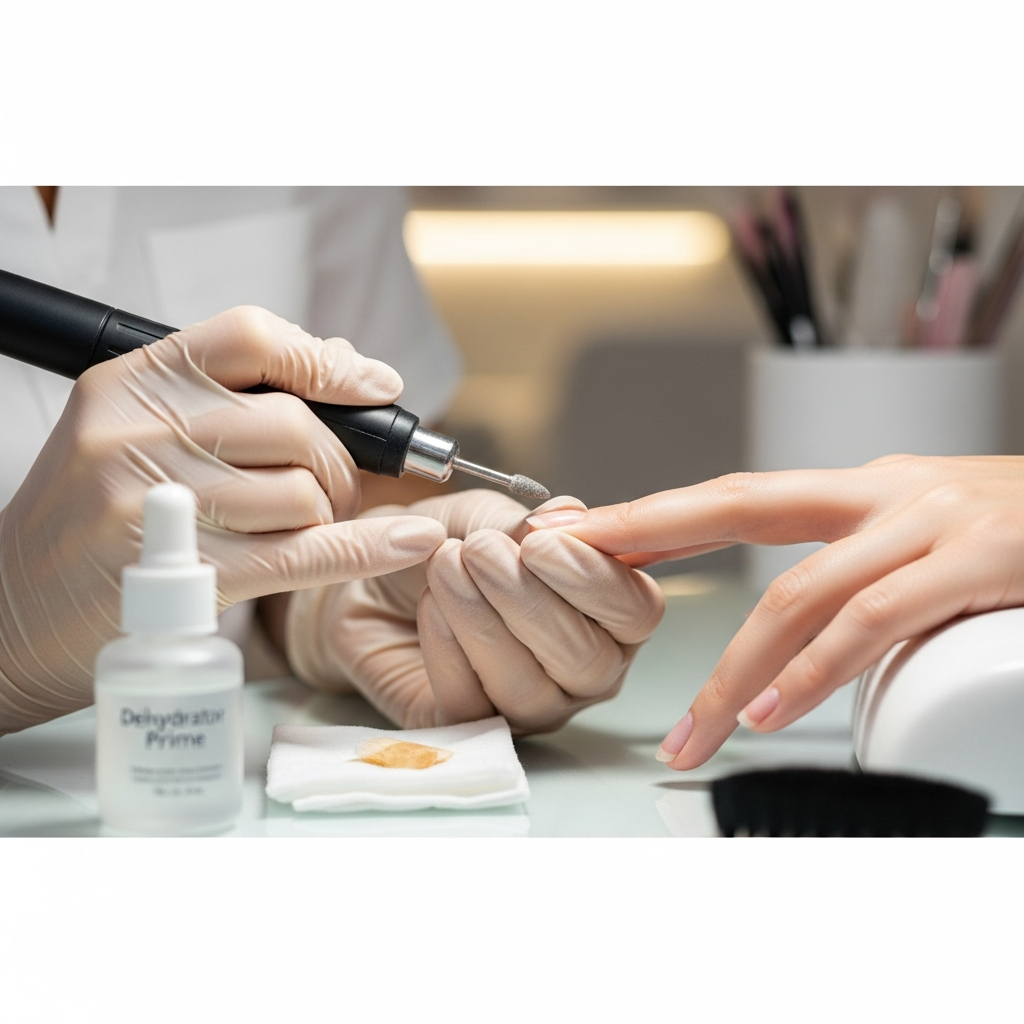
Successful adhesion begins with the complete removal of the cuticle from the nail plate. Use a professional pusher or a diamond e-file bit to gently exfoliate the non-living tissue.
The nail plate must be lightly buffed to remove the natural shine. This creates a microscopic texture that allows the enhancement product to anchor securely to the keratin layers.
Ensure all dust is removed using a stiff nylon brush and a lint-free wipe. Residual dust is a leading cause of pocket lifting near the side walls and proximal fold.
Chemical Preparation and Surface Dehydration
After mechanical prep, use a professional-grade dehydrator to temporarily remove oils and moisture from the nail surface. This step is critical for consistent product performance.
Apply a primer or bonding agent based on the specific needs of the client. Acid-based primers provide a strong etch for oily plates, while acid-free primers act as double-sided tape.
Avoid touching the prepared nail plate with your own fingers. Natural skin oils will instantly re-contaminate the surface and compromise the bond of the enhancement.
Precise Product Application Techniques
Always leave a tiny margin between the product and the surrounding skin. If gel or acrylic touches the eponychium or side walls, the nail will lift as it grows out.
- Thin Application: Apply base coats thinly to prevent pooling in the tracks.
- Apex Placement: Ensure the structure supports the stress area to prevent mechanical lifting.
- Capping the Edge: Seal the free edge of the nail to protect against water infiltration.
Managing High-Moisture Clients
Some clients have naturally oily or hyper-hydrated nail plates that resist standard adhesion. For these cases, a double-dehydration process is often necessary before the priming step.
Evaluate the client’s lifestyle to determine if they require a more flexible or more rigid product. Matching the product density to the natural nail flexibility reduces the risk of delamination.
Avoiding Common Technical Mistakes
Applying product too thick near the cuticle creates a ledge that catches on hair and clothing. Always taper the product to a flush finish at the proximal nail fold.
Ensure your curing lamp has the correct wavelength and intensity for your specific gel system. Under-cured product lacks the structural integrity to maintain a long-term bond.
