Optimizing Daily Workflows for Nail Salon Management
Managing a nail salon requires coordinating technician schedules, inventory usage, and service timing to maximize booth turnover and revenue. Effective nail salon operations focus on standardized workflows that reduce downtime between clients while maintaining strict sanitation protocols and high-quality application standards across every station in the professional facility.
Standardizing Nail Service Protocols
Consistency is the foundation of a successful nail salon operation. Every technician must follow the same steps for prep, application, and finishing to ensure predictable results.
Establishing clear Standard Operating Procedures (SOPs) prevents service variations that can lead to client dissatisfaction. These protocols should cover everything from cuticle work to final top coat application.
Uniformity in service timing allows the floor manager to predict daily capacity accurately. When every nail technician works within the same timeframes, scheduling conflicts and wait times are minimized.
Technician Rotation and Performance Control
A fair rotation system is essential for maintaining staff morale and maximizing total salon output. Managers must track the types of services each technician performs throughout the day.
Monitoring the speed and quality of nail enhancements versus natural nail services helps in identifying training needs. High-performing technicians should be positioned to handle complex requests during peak hours.
Effective scheduling must account for technician fatigue, especially in high-volume environments. Structured breaks ensure that the quality of intricate nail art or technical acrylic work remains high.
Managing Professional Product Costs
Product waste is a significant hidden cost in nail salon management. Controlling the distribution of monomer, polymer, and gel products is vital for maintaining profit margins.
Managers should implement a system for tracking back-bar inventory usage per station. This practice identifies excessive product consumption and helps in forecasting future supply needs accurately.
Limiting the amount of professional-grade product dispensed per service prevents unnecessary loss. Small adjustments in how technicians handle nail liquids and powders can significantly impact monthly expenses.
Station Turnover and Sanitation Cycles
Efficient station turnover is critical for maintaining a high client volume without compromising safety. Every nail station must be cleaned and disinfected according to state regulations between appointments.
A structured sanitation workflow ensures that implements are properly processed in the sterilization area. This process must be integrated into the technician’s daily routine to avoid bottlenecks.
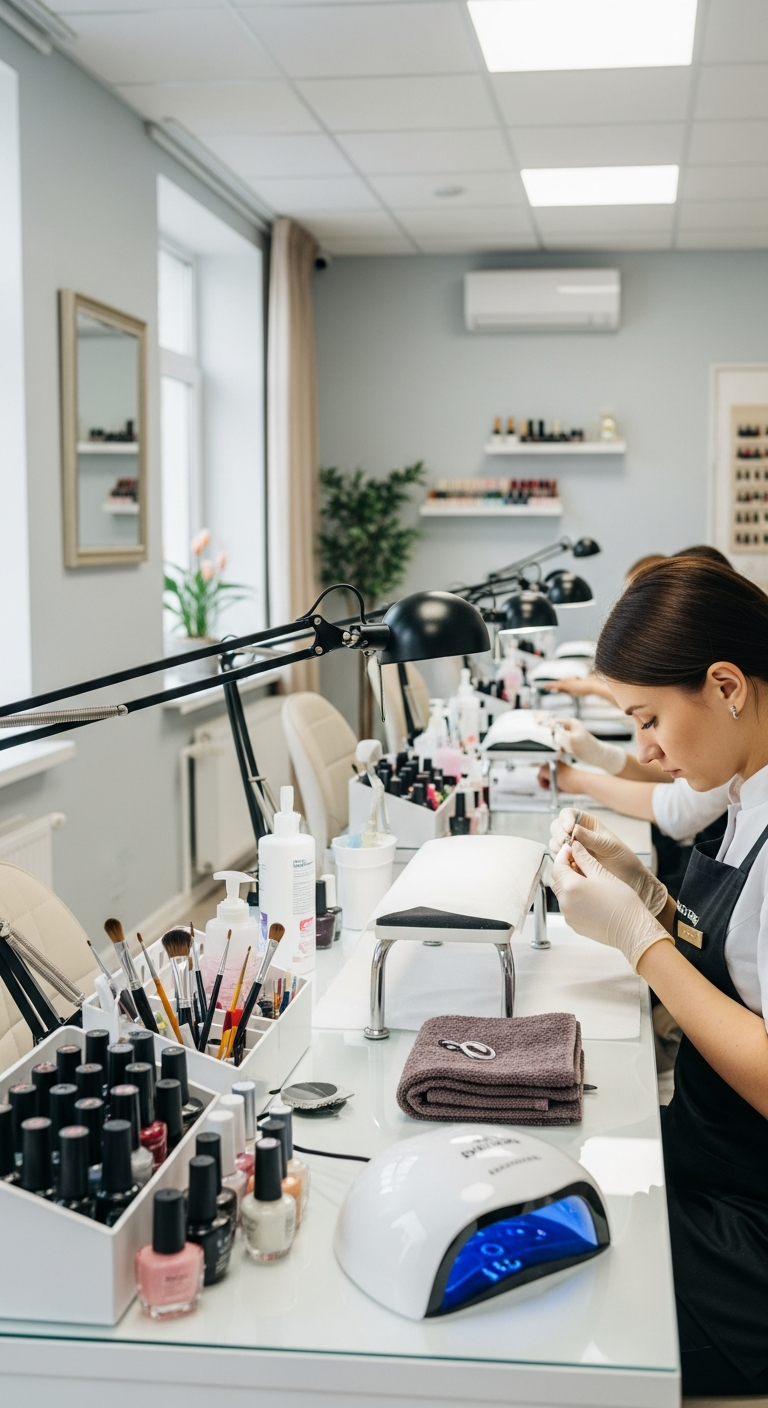
Regular inspections of the nail salon floor help maintain professional standards and safety compliance. Clean workstations and organized tool storage reflect the operational discipline of the management team.
Tracking Daily Revenue and Operational Metrics
Daily revenue tracking should go beyond simple sales totals. Managers must analyze service-to-product ratios and the average ticket price per nail technician.
Identifying slow periods allows for adjustments in staffing levels, reducing unnecessary labor costs. Understanding these patterns is key to long-term financial stability in the competitive nail industry.
Operational success depends on the ability to balance high-quality technical execution with disciplined business management. Consistent monitoring of these core areas ensures the nail salon remains profitable and professional.
