Optimizing Daily Nail Salon Operations and Workflows
Standardizing nail salon operations involves implementing consistent service protocols, hygiene mandates, and workflow transitions to ensure uniform quality across all technicians. Effective nail salon management relies on clear Standard Operating Procedures (SOPs) that govern daily tasks from station setup to client handoffs, minimizing downtime and maximizing total daily service revenue.
Developing Standard Operating Procedures for Nail Services
Consistent service delivery is the foundation of a successful nail business. Standard Operating Procedures (SOPs) define exactly how each technician should perform every service from a basic fill to complex nail enhancements.
Establishing these standards prevents variations in service quality that can drive away repeat clients. Every nail technician must follow the same technical steps to ensure durability and aesthetic consistency across the entire team.
Morning Prep and Station Readiness
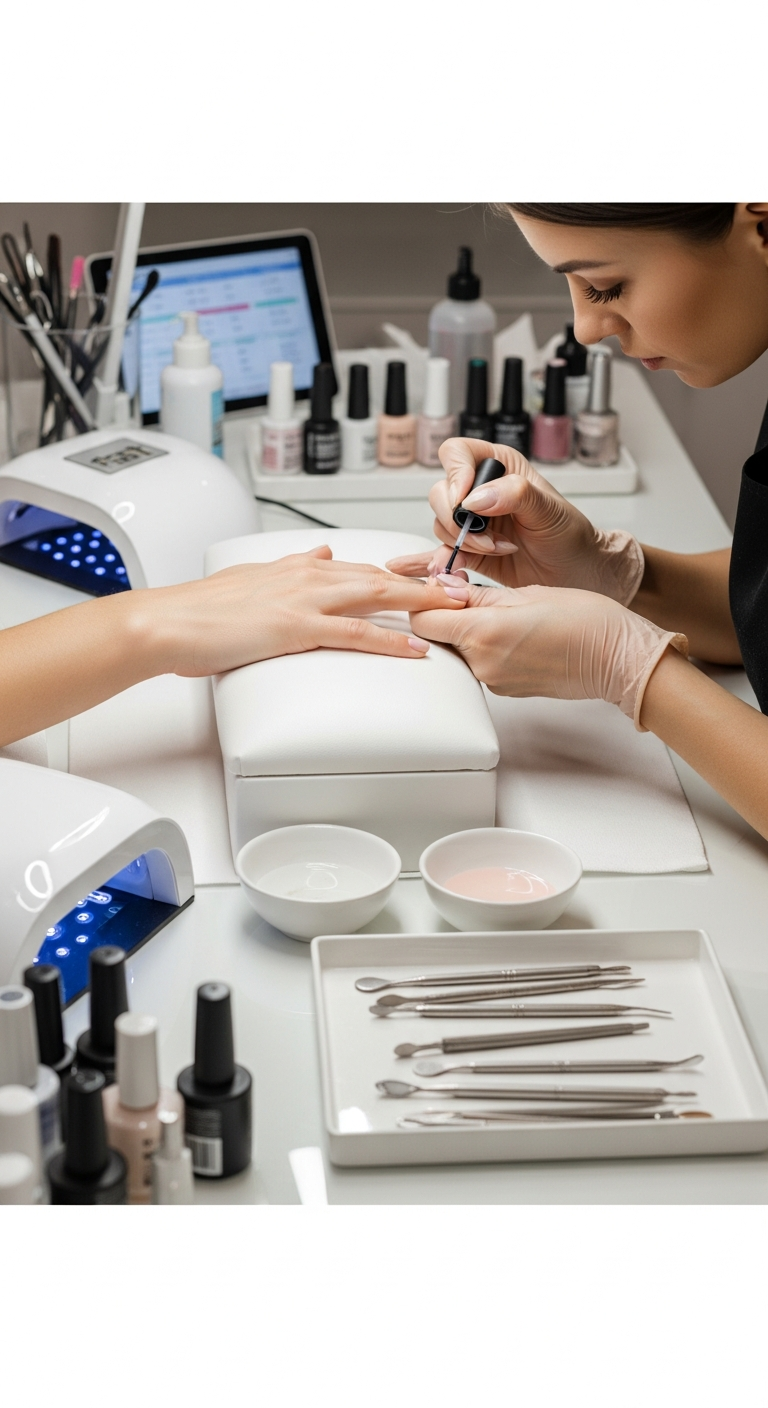
Efficiency begins before the first client arrives at the nail station. Technicians must ensure all implements are sterilized according to state board regulations and that all necessary nail liquids and powders are replenished.
- Sanitation check: Verifying all autoclaves or chemical soaks are ready for the workday.
- Inventory audit: Ensuring enough monomer, polymers, and gel polishes are accessible for the scheduled appointments.
- Station setup: Arranging towels, files, and bits to minimize reaching during the service.
Service Execution and Quality Control
Standardizing the nail application process reduces waste and speeds up service times without sacrificing quality. This includes specific guidelines for nail preparation, product application, and the final finishing steps.
Implementing a final inspection checklist ensures that every set of nails meets the salon professional standards. Technicians should check for shape symmetry, cuticle cleanliness, and smooth product transition before the client leaves.
Staff Scheduling and Performance Management
Effective scheduling balances nail technician availability with peak client demand hours. Proper management requires tracking the average service time for each technician to optimize the daily appointment book.
Reviewing performance metrics like rebooking rates and service speed helps identify specific training needs. High-performing nail technicians should be scheduled during peak hours to maximize the salon revenue potential.
Labor costs represent a significant expense in a nail salon operation. Managing these costs requires a deep understanding of technician productivity and the strategic use of downtime for salon maintenance tasks.
Managing Operational Costs and Inventory Control
Controlling professional product usage is critical for maintaining healthy profit margins in a nail salon. Over-using specialized nail products can quickly erode the profitability of even the busiest stations.
Establish strict dispensing protocols for high-cost items like gel systems and professional nail enhancements. Regular inventory counts prevent stockouts and help identify areas where product waste may be occurring.
- Waste reduction: Training staff on the correct ratio of nail liquid to powder.
- Cost tracking: Monitoring the cost per service for different nail enhancement types.
- Supply rotation: Ensuring older nail polishes and chemicals are used before new stock.
