Advanced Nail Preparation Techniques for Maximum Retention
Nail lifting is the separation of artificial enhancements from the natural nail plate, primarily caused by inadequate surface preparation or oil contamination. Professional technicians eliminate lifting by performing meticulous cuticle removal, etching the nail plate with a 180-grit file, and using professional-grade dehydrators to ensure a clean, dry surface for maximum product adhesion.
The Critical Role of Mechanical Preparation
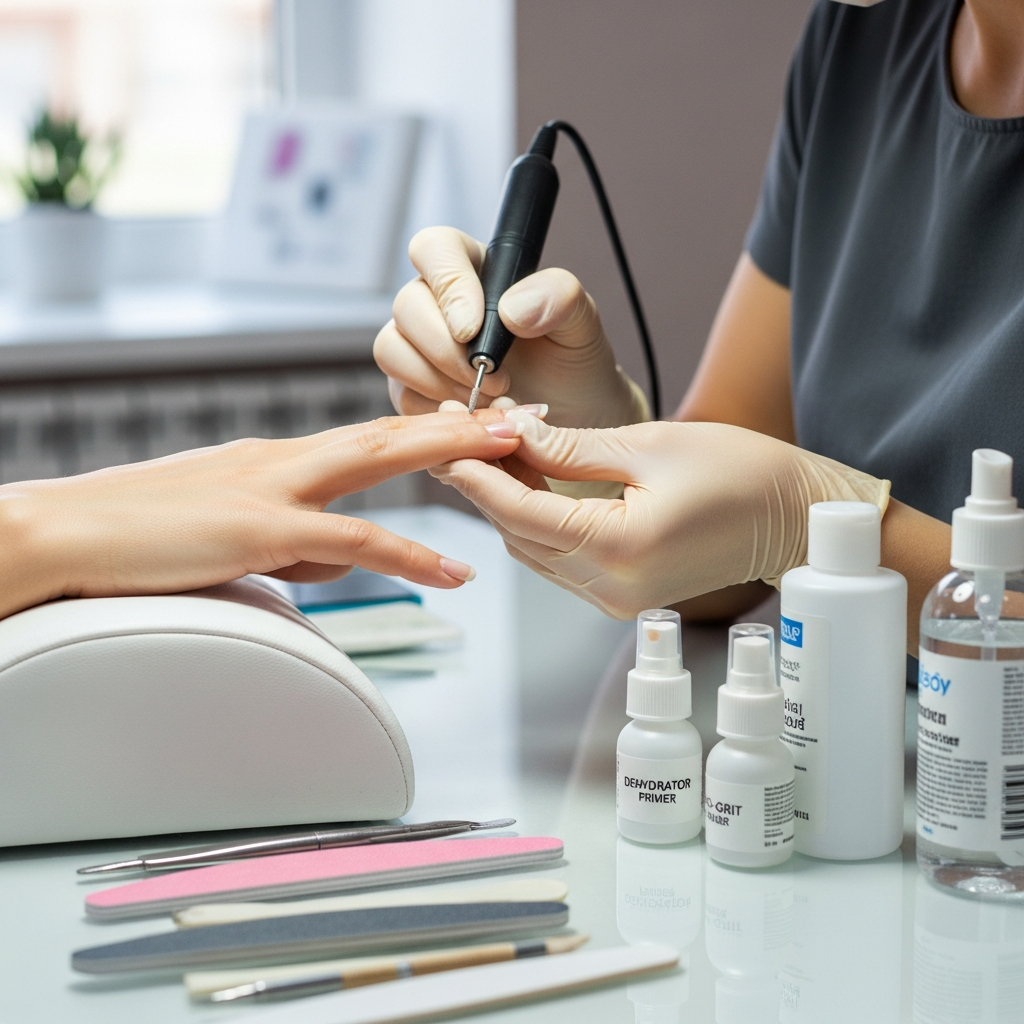
Mechanical preparation involves removing the non-living tissue from the nail plate to reveal a clean surface. Using a professional e-file with a fine diamond bit allows the technician to clear the lateral folds and the proximal nail fold area effectively.
Remaining pterygium is the leading cause of service failure in U.S. salons. If the enhancement is applied over even a microscopic amount of skin, the natural oils from the tissue will cause the nail product to pull away within days.
Technicians must also remove the surface shine using a 180-grit or 240-grit buffer. This creates “micro-scratches” on the nail plate, providing a textured landscape that allows the base coat or polymer to anchor securely to the keratin layers.
Chemical Dehydration and Priming Standards
Once mechanical prep is complete, chemical preparation ensures the nail plate is free of moisture and oils. Applying a professional-grade dehydrator temporarily evaporates the oils from the top layers of the nail plate.
Following dehydration, the choice of primer depends on the product system being used. Acid-based primers create microscopic pits in the nail for mechanical locking, while non-acid primers act like double-sided tape to create a chemical covalent bond.
-
Key Steps for Chemical Prep:
- Scrub the nail plate with a lint-free wipe and 90% isopropyl alcohol.
- Apply dehydrator to the entire surface, including the free edge.
- Apply primer sparingly to avoid flooding the surrounding soft tissue.
Structural Integrity and Product Application
Proper structure is essential for durability and preventing mechanical lifting. The nail enhancement must have a correctly placed apex to absorb the daily impact and stress placed on the free edge of the nail.
If the product is applied too thick at the cuticle area, it creates a ledge that catches on hair or clothing. This constant tension eventually breaks the bond between the nail plate and the enhancement, leading to premature lifting.
Always leave a tiny margin—the thickness of a hair—between the product and the skin. This “gap” ensures that the product seals to the nail plate rather than the skin, which is vital for maintaining a professional and long-lasting finish.
Common Technical Mistakes to Avoid
One frequent error is over-filing the nail plate, which thins the keratin layers and makes the foundation too flexible to support hard products. A weak, thin nail will bend away from rigid acrylic or hard gel, causing the product to shatter or lift.
Another mistake is failing to cap the free edge during the base and top coat stages. Capping ensures the product wraps around the tip of the nail, preventing moisture from seeping between the enhancement and the natural nail plate.
